Sunday, September 29, 2013

TOW 3 - My Big Fat Greek Wedding

This weekend I decided to watch a movie that my mom has raved about, My Big Fat Greek Wedding, when it occurred to me that this is a text. The overlooked credits at the beginning of any film establish its credibility; those production companies are hinting that because they have created other successful films therefore this one is just as good, for example take those of My Big Fat Greek Wedding: IFC Films, Gold Circle Films and Playtone. The success of the film can also be due to the previous accomplishments of the movie’s actors. Known actors, like Nia Vardalos and John Corbett, and their reputation set up the film for success and therefore establish the film’s credibility. The reputations of both of the above, the production companies and the actors, implies logic that states because our past work is loved, our new work will be loved as well. This logic only applies to a specific group of people, primarily women, families, or hopeless romantics. Simply said the purpose is to get the audience to watch, but on a more complex level the purpose is to encourage the audience to follow their heart. The plot demonstrates through emotion and logic, that sometimes it is necessary to be a little selfish and go after what you want, despite what others think. This idea resonates with the audience because it is a motto that many people live by or wish to live by. Specific lines in the dialogue or concepts in the plot are relatable to the audience, such as the idea of being lonely or being patronized by family. A major idea of the plot, the pride in Greek heritage, appeals to not only emotion, on the level of being proud of who you are, but also logic. The time period of the movie’s release adds plausibility: the America is renowned for its massive amount of immigrants, but in the 90s that number increased even more so. After analyzing the movie’s rhetoric, subtle elements appealing to ethos, pathos and logos make the movie so much better.
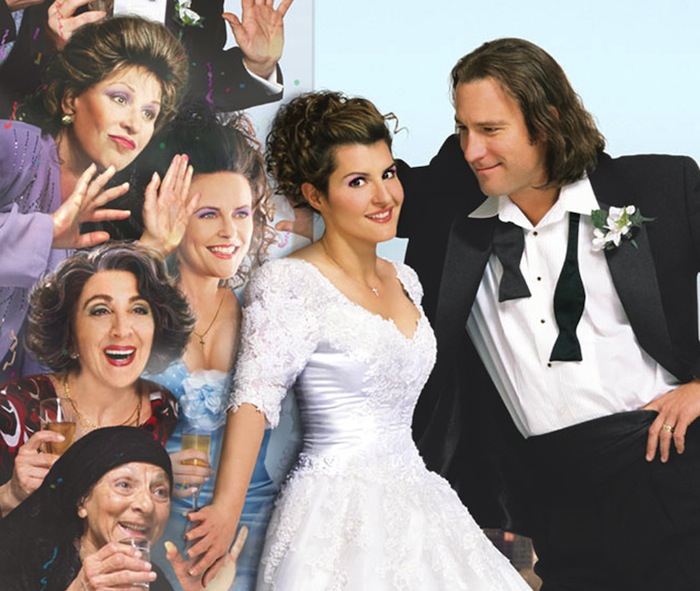

http://cdn-media.hollywood.com/images/l/My-Big-Fat-Greek-Wedding.jpg

Sunday, September 22, 2013

TOW 2 - Syria Cartoon (Dan Nott)


With the conflict over Syria's use of chemical weapons, it is no surprise that there is an abundance of political cartoons about the subject. Political cartoons typically explain the public’s general attitude towards a current event. I have seen numerous images emphasizing Obama’s red line, Assad with a butcher’s knife, or Putin handing off weapons to the Syrians. However Dan Nott, the artist behind the cartoon below, expresses a different and unlikely opinion. In this image, the author establishes his credibility through his knowledge and understanding of the issue: he reminds the audience, anyone up to date in current events, of the choices President Obama has, and then he states the aftermath of each option if it were to be chosen. The results of each door appeal to logic, as the audience can understand how or why those possibilities would occur. The inclusion of those speech bubbles demonstrates not only Nott’s empathy for the President, but also for the Syrian people. Nott’s diction, “death, escalation, and chaos,” causes the audience to mimic his feelings of empathy towards both the Syrians and the President. Nott explains that the President will be “blamed” for the results of either scenario, no matter what Obama chooses. Essentially, that was Nott’s purpose: to convince the audience to understand that the President has a tough decision to make that, in either situation, is a no win scenario. Nott wants the audience to not be so narrow-minded as the situation is not as simple as anyone would like to believe. This idea is refreshing: cartoonists tend to pick apart politicians; so to see one encourage the public to empathize with the President is inspirational. The purpose of this cartoon easily gets across to the reader in a way that is innovative, compassionate and clever, for that I admire Nott.

http://dannott.com/tag/syria/

Saturday, September 14, 2013

TOW 1 - Overpopulation Article (Erle C. Ellis)


There is a common belief that the dangers of overpopulation will prevent humanity from progressing past a certain point. Scholars, from centuries ago such as Thomas Malthus or from today, often support this theory with graphs and research, but Erle C. Ellis condones those intellectuals. Ellis, a biologist and associate professor of geography and environmental systems at the University of Maryland, has admit to believing this idea himself, but after realizing its flaws, he explains it as simple misconception of ecology. Ellis strives to convince his audience of the error in this theory that human methods of exploiting the planet’s resources will result in its demise.  By portraying the original theory as stupid and trivial, in the same way a school bully degrades children, Ellis bullies the reader into believing his theory. Though this tactic may seem childish and shameful, it is emotionally and logically effective in pointing out the flaws in any mindset besides Ellis’s. Emphasizing the historical pattern, Ellis explains that humans have manipulated nature since the beginning of time and it is that manipulation that has sustained populations’ survival, therefore contradicting the theory that humans must adapt to the fully natural environment. Logical thought is Ellis’s primary approach to appealing to his audience, as that Ellis targets a specific group of scholars. Referencing terms and people such as niche, Anthropocene, and Thomas Malthus, specifies the audience to only a group of educated people who would understand the allusion. This is both beneficial and damaging to Ellis’s purpose: Ellis pled to scholars who would empathize and perhaps agree with his opinion, but because Ellis wanted the theory to be widespread and generally accepted, he fails to appeal to a wide enough audience. However, if the theory against the danger of overpopulation were to be accepted by scholars, it could be broadcast to the public. By specifying his audience, Ellis limits the chances of his theory becoming common belief, and in that aspect, Ellis fails to achieve his purpose.


Wednesday, September 11, 2013

IRB Intro Post: MP1


Solo: A Memoir of Hope is a dual natured phrase: not only is it inspiration to persevere, but it is also testament to the grit of one woman. In her autobiography, Hope Solo, the goalkeeper for the United States’ Female Soccer team, explains the unpublicized obstacles of her past. Solo’s struggles are a reminder to soccer players, athletes and fans alike that these difficulties may shape a person, but it will not restrict his or her future. In hopes of strengthening my passion for soccer and my respect for Solo, I am reading this book with an open mind. Solo has not let me down so far; I have faith in her as a keeper and now as a writer.

Sunday, August 11, 2013

Where God Is Glad


Associating strip clubs with God and enlightenment seems to be an unusual connection, yet it can be done. Joe Wenderoth’s personal essay, Where God Is Glad, reminisced on his visits to Tony’s, a strip club he claims to be like no other. Each time Wenderoth went to the club, he faced new personalities and situations that he found uniquely indescribable. After each encounter, Wenderoth felt the need to write about Tony’s, but he could not find the words. Then after having a sort of epiphany about the club, he began to write about the stories he gained and the lessons he learned. Wenderoth suddenly realized that Tony’s is more like a hospice than an actual strip club (257); it is a place for self-loathing and reflection. Instead of being pitiful, Wenderoth said people should be enjoying their life and accomplishments. People are the same in the way that everyone has to get through life and manage to get up in the morning; Wenderoth wished to remind the reader that that is what should be celebrated. Wenderoth uses an allusion and metaphor to enhance this point by comparing the club dancer to “Narcissus in the calm blind pulse of inparticularity’s most decisive triumph: facelessness” (258).  Wenderoth uses vivid description and powerful wording to explain that statement’s meaning: the original beauty of that dancer, which caused breathlessness, became faded and unoriginal, which made her faceless. This facelessness enforces the idea that people all have the same basic struggle. Though hard to follow and understand for the majority of the essay, once Wenderoth compared the club to a hospice, the reader could begin to infer his message and purpose. The beginning of the essay gave tedious background information, and the conclusion reinforced Wenderoth’s message: the Aztec poem, “I Might Die in This Battle,” which enforced that idea that everyone must struggle, but God is proud of each and every persevering person.


God Watching Over Everyone
http://www.bubblews.com/news/61763-arguments-for-the-existence-of-god-shifting-the-burden-of-proof